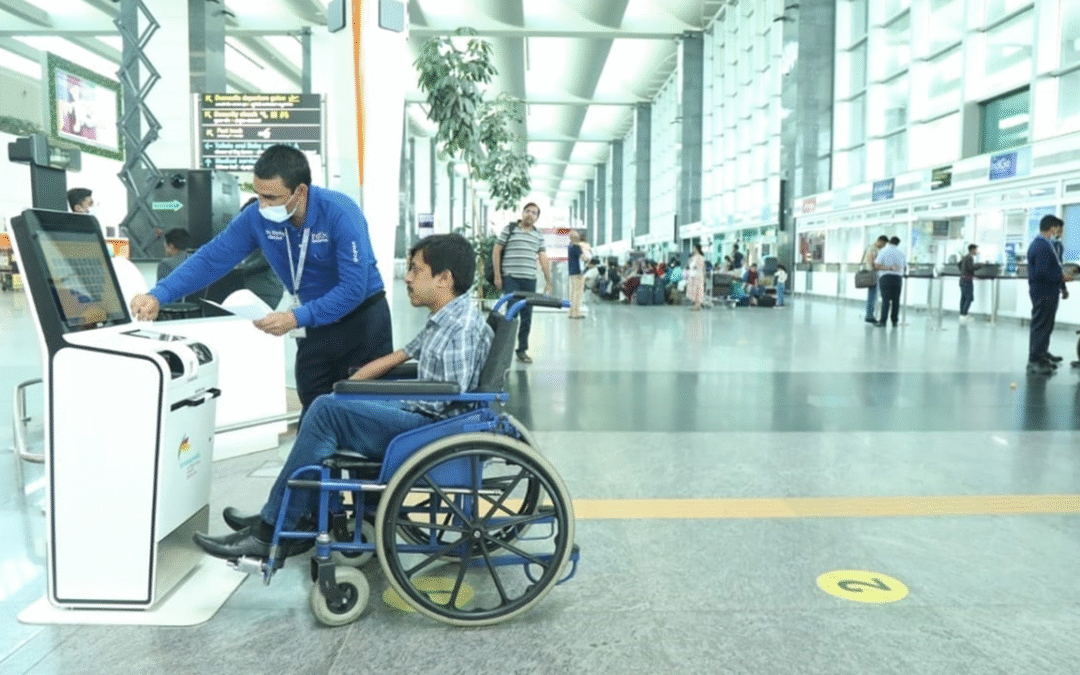
In the bustling chaos of India’s airports, where long queues snake through security like veins in a weary body, the wheelchair service was meant to be a lifeline—a quiet dignity afforded to those whose steps falter under the weight of age, illness, or injury. Yet, what began as a compassionate concession has devolved into a brazen exploit, turning a vital support system into a shortcut for the able-bodied. As someone who’s navigated these terminals both as a traveler and an observer of human folly, I can’t help but feel a mix of outrage and sorrow.
The rampant misuse of wheelchair assistance isn’t just an inconvenience; it’s a moral failing that leaves the truly vulnerable stranded, quite literally, in the shadows of entitlement. It’s time we confronted this epidemic head-on, before it erodes the last threads of empathy in our skies.
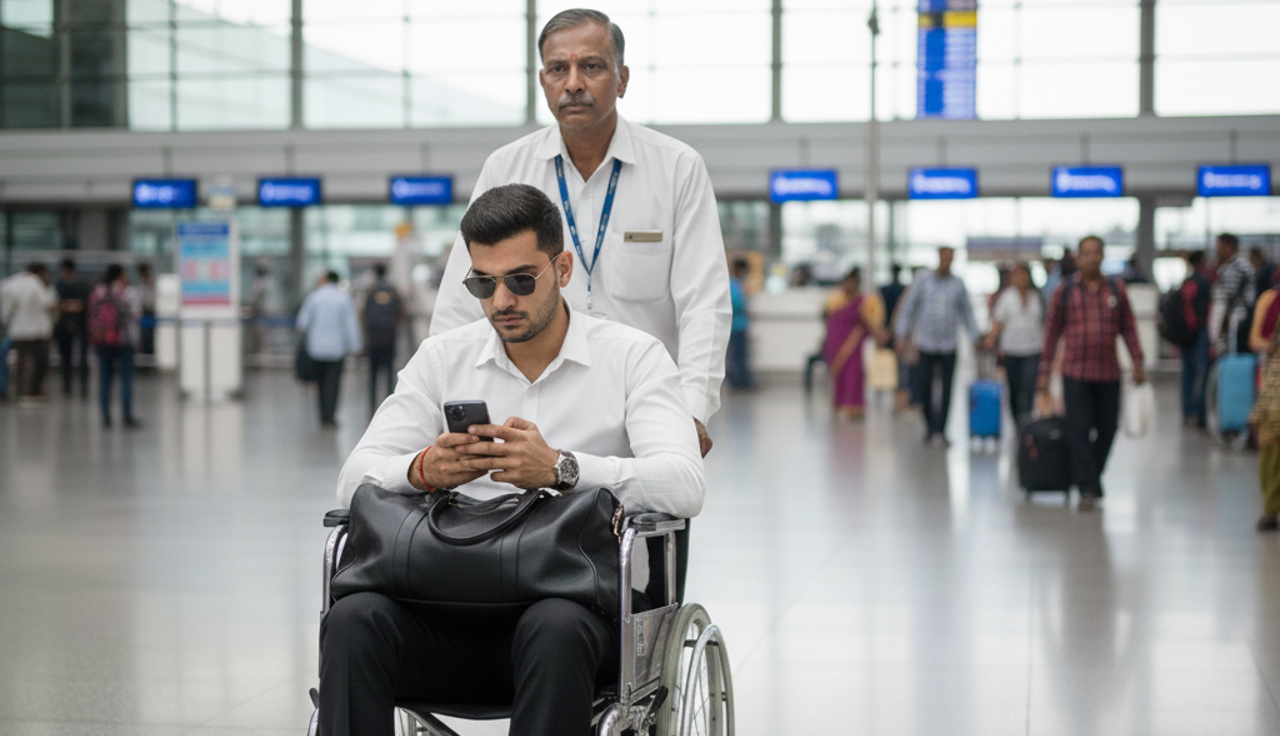
Picture this: a frail elderly woman, arthritic knees screaming with every step, arrives at Delhi’s Indira Gandhi International Airport, her pre-booked wheelchair request dangling like a forgotten promise. But instead of swift relief, she’s met with a shortage—wheelchairs whisked away by a phalanx of fit passengers in their prime, eager to shave minutes off their immigration wait or snag priority boarding. This isn’t hyperbole; it’s the grim reality fueled by a surge in requests that has overwhelmed airlines and airports alike. On international routes, particularly to the US and UK, up to 30% of passengers now demand this service, a figure that’s less about necessity and more about navigating the labyrinth of modern travel with minimal effort. indianeagle.com Why walk when you can roll?
The allure is seductive: skip the serpentine lines, bypass the sweat of crowded halls, and emerge at your gate feeling like royalty—all for free. But this “perk” comes at a steep human cost. Genuine users, from cancer survivors to post-surgery patients, are forced to hobble or collapse in exhaustion, their dignity bartered away for someone else’s comfort.
This isn’t a fringe issue; it’s a full-blown crisis, spotlighted by a string of infuriating incidents that have ricocheted through headlines and social media. Take the viral video from Dallas Airport in November 2025, where a convoy of seemingly able-bodied Indian travelers monopolized every available wheelchair, leaving actual disabled passengers in the lurch. Shared widely on X (formerly Twitter), the clip drew sharp rebuke from Indian-American immigrants who lamented, “I wish I could defend this, but…”—a heartbreaking admission of collective shame.
Closer to home, a February 27, 2025, fiasco at Mumbai’s Chhatrapati Shivaji Maharaj International Airport saw 750 wheelchair bookings for Air India’s domestic flights alone, with staff witnessing up to 120 requests per international departure—many from passengers who ditched the chairs post-security, striding off like they’d just aced a yoga class.
And let’s not forget the January 2025 debacle that slapped Air India with a Rs 30 lakh fine from the Directorate General of Civil Aviation (DGCA) for failing to deliver pre-booked wheelchairs, a direct fallout from overbooking by non-genuine users in their 40s and 50s. These aren’t isolated blips; they’re symptoms of a deeper malaise.
As Biocon founder Kiran Mazumdar-Shaw pithily noted in a November 16, 2025, X post reacting to yet another viral clip of Indians queuing in wheelchairs at an unnamed US-bound gate, “Charge ₹5,000 and see how many are genuine.” Her words, echoed in outlets like Gulf News on November 17, 2025, ignited a firestorm, exposing how this “wheelchair mafia” isn’t just clogging terminals—it’s delaying flights, overburdening staff, and, worst of all, normalizing a culture where vulnerability is gamed for gain.
The fallout is visceral. Airport ground crews, already stretched thin, report instances where up to 50% of requesters abandon their props after clearing checkpoints, a betrayal that mocks the very system designed to uplift.
For the elderly or disabled who rely on this aid—often unaccompanied NRIs visiting family or medical tourists returning from treatment—the denial feels like a slap. One Air India official, speaking anonymously in a March 28, 2025, CNBC TV18 report, confessed the airline’s hands are tied: they can’t refuse requests without proof, turning policy into a polite fiction. And in a nation where public discourse often romanticizes “atithi devo bhava” (guest is god), this exploitation sours that ethos, painting Indian travelers as opportunistic rather than resilient. It’s not racism to call it out—it’s accountability. As a society hurtling toward middle-income status, we can’t afford to let convenience trump compassion; it diminishes us all.
To stem this tide, the DGCA must enforce ironclad rules that prioritize the needy without alienating the hesitant. First, mandate a valid medical certificate from a registered practitioner for all wheelchair requests, submitted at booking with digital verification to weed out casual claimants. Exemptions could apply for emergencies, but routine use demands proof—be it a doctor’s note for mobility impairments or age-related affidavits for seniors over 70.
Second, impose steep fines: Rs 10,000 for first-time misuse, escalating to Rs 50,000 for repeat offenders, with spot audits by airport marshals empowered to revoke assistance mid-journey if passengers demonstrate undue vigor. Airlines should integrate this into their apps, flagging suspicious patterns like frequent requests without documentation.
Finally, roll out affordable alternatives—a nominal Rs 500 buggy service for the weary but able, marketed aggressively to redirect the convenience-seekers. These measures, if implemented swiftly, would not only free up resources but restore trust: the wheelchair becomes a shield for the weak, not a scepter for the sly. The DGCA’s recent nod to fees, as reported on November 3, 2025, by IndianEagle, is a start—but half-measures won’t cut it.
Bold enforcement will. In the end, this isn’t about shaming travelers; it’s about reclaiming equity in the air. India’s airports are gateways to the world, symbols of our ascent. But when we hobble the system meant to carry us, we risk leaving our most fragile behind. Let’s wheel forward with integrity—or risk rolling backward into infamy. The choice is ours; the chairs are running out.